
Net Zero Asset Transformation for Institutional Real Estate Asset Owners
Decision Intelligence™ for Boards and Executive Management.
Integrating engineering, finance, investment governance, risk and scenario analysis into one executive decision process to protect long-term asset value.
Why Net Zero Creates an Investment Challenge
Net Zero is not primarily a technology challenge.
It is a capital allocation challenge.
The UAE decarbonisation timeline is not only a regulatory roadmap — it is an investment roadmap.
With interim reduction targets, reporting requirements and long-term decarbonisation objectives extending through 2035 and beyond, owners must make infrastructure investment decisions today that will shape asset performance for decades.
Every Owner Faces The Same Questions
- Which major investments should be implemented now?
- Which infrastructure renewals can safely be deferred?
- Which retrofit measures should be completed before 2030?
- Which investments are best aligned with 2035 objectives?
- How can future technology lock-ins and stranded investments be avoided?
The challenge is not simply achieving future Net Zero targets.
The challenge is determining the right investments, the right timing and the right sequence to preserve capital, protect asset value and improve long-term investment performance.
Why Ownership Needs a Different Perspective
Why Major Asset Investment Decisions Are Different
Major infrastructure and Net Zero investments are rarely technical decisions alone.
Asset owners must balance multiple objectives simultaneously:
- Ownership & Stakeholder Alignment
- Infrastructure Lifecycle & Renewal Timing
- Operational Performance Requirements
- Energy Supply & Utility Dependencies
- Regulatory & Decarbonisation Requirements
- Capital Allocation & Investment Returns
- Long-Term Asset Value
Every major investment decision influences future capital requirements, operating costs, asset value and long-term investment returns — often for decades.
No single consultant, contractor or technology supplier typically sees the complete picture.
That is why major investment decisions should be evaluated against their long-term impact on capital efficiency, asset value and investment returns — not technology considerations alone.
Why Independent Owner’s Representation Matters
The greatest investment risk is often not the technology itself — but who defines the decision.
- Consultants recommend.
- Contractors deliver.
- Technology vendors sell.
Owners carry the investment risk.
That is why major infrastructure and Net Zero investments require independent oversight focused exclusively on protecting ownership interests.
Our Role
- Challenge assumptions
- Evaluate alternatives
- Protect investment decisions
- Create procurement transparency
- Verify operational outcomes
Acting exclusively in the interests of ownership.
Clarity before Capital is Committed
Major infrastructure and Net Zero investments can influence asset value and capital requirements for decades.
We help ownership identify:
The Right Investment
Which infrastructure upgrades and retrofit measures create the greatest long-term value.
The Right Timing
When investments should be implemented and when capital can be preserved.
The Right Sequence
How infrastructure renewal, decarbonisation objectives and investment priorities should be aligned.
The Right Outcome
Protecting asset value, reducing investment risk and improving long-term returns.
A structured path to better investment decisions
Major infrastructure and Net Zero investments can influence asset value, operating performance and capital requirements for decades.
We help ownership identify the right investments, the right timing and the right sequence before significant capital is committed.
Phase 0
Strategic Investment Pathways
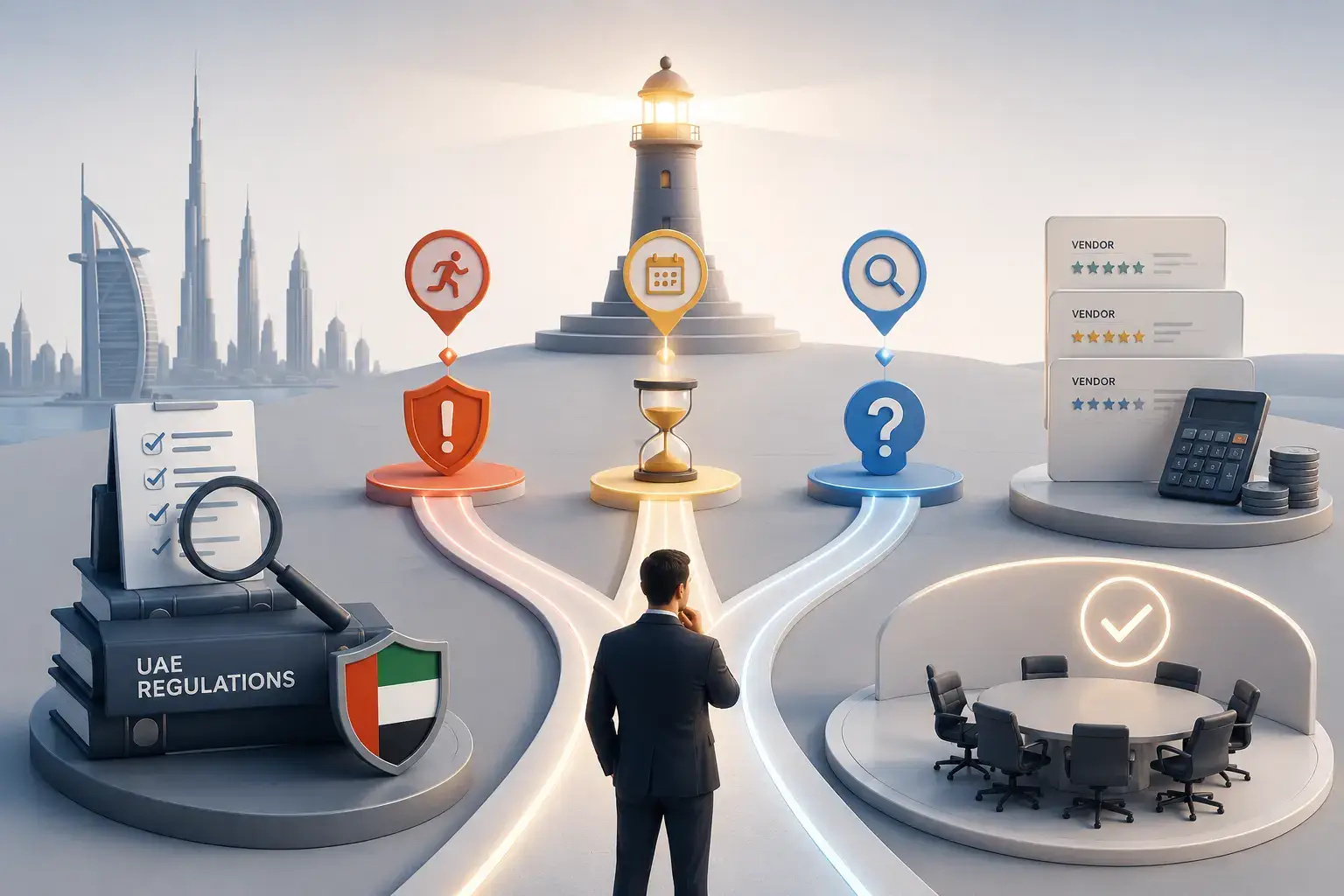
Establishing an independent foundation for major investment decisions
We assess:
- Infrastructure renewal priorities
- Alternative Net Zero pathways
- Investment timing scenarios
- Risks and opportunities
- Strategic decisions requiring Board review
Outcome: Greater decision clarity before capital is committed.
Phase 1
Procurement & Investment Preparation
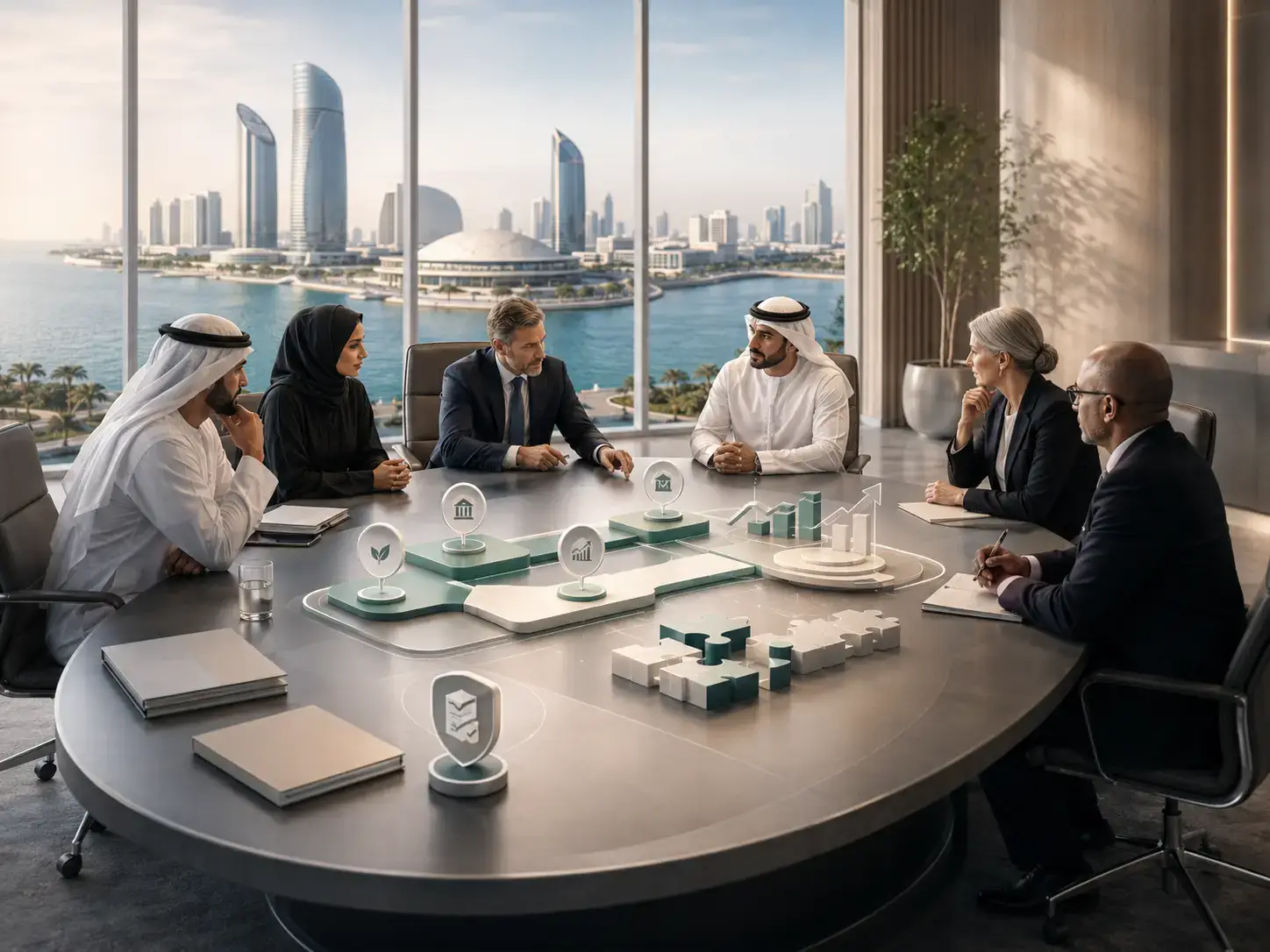
Translating approved investment pathways into clear procurement and performance requirements.
We help ownership:
- Compare alternative solutions
- Create procurement transparency
- Align technical and commercial objectives
- Reduce execution risk
Outcome: Better procurement decisions and stronger governance
Phase 2
Owner’s Representation & Investment Protection
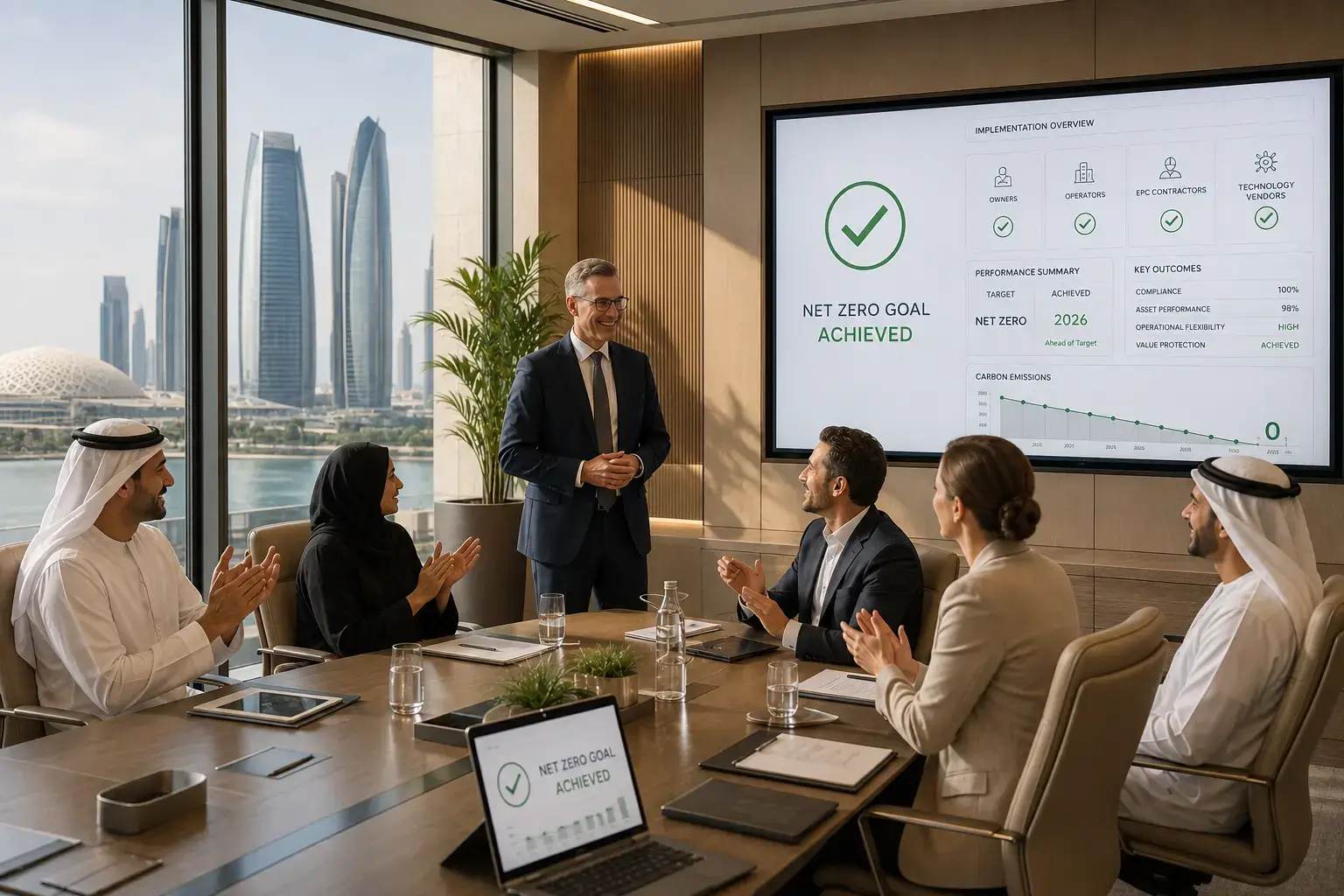
Protecting ownership interests throughout project execution.
We provide:
- Independent owner-side representation
- Oversight of critical investment decisions
- Protection against scope drift and technology substitutions
- Alignment with approved objectives
Outcome: Investment strategies delivered as intended.
The Perspective Behind HAAS
Major infrastructure and Net Zero investments are too important to be driven solely by technology vendors, contractors or project teams.
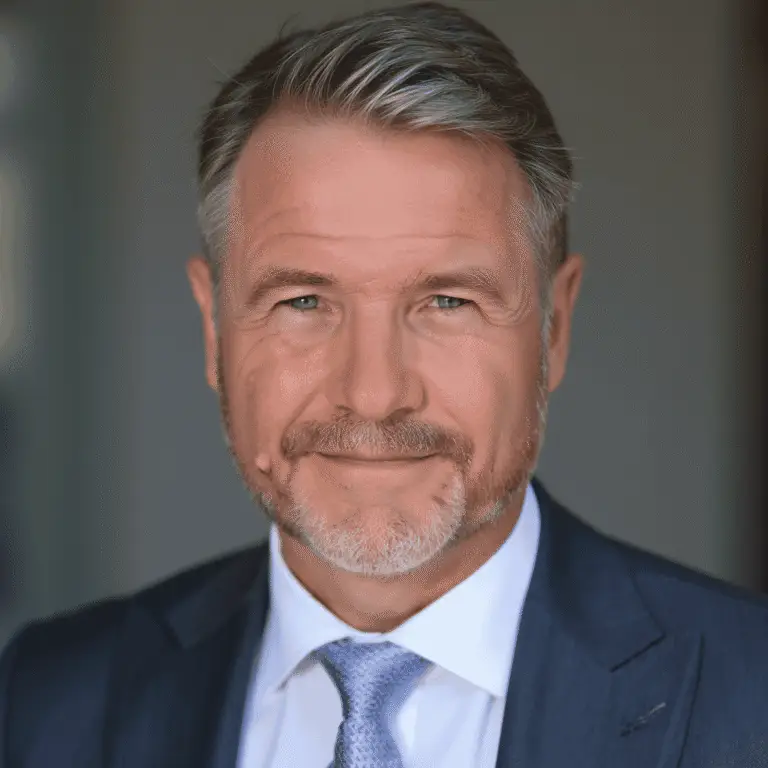
Winfried Haas provides an independent ownership perspective built on more than 30 years of engineering, infrastructure and asset transformation experience.
Having led major infrastructure and energy programmes in Germany and the UAE, he helps ownership evaluate investment pathways, challenge assumptions and protect long-term asset value.
Why Ownership Chooses HAAS
30+ Years German Leadership
Major infrastructure, energy and asset transformation programmes.
30,000+ Buildings Assessed
Strategic framework lead for Abu Dhabi’s emirate-wide DSM Programme.
Independent Ownership Perspectiv
No technology sales. No implementation contracts. No contractor interests.
Who we support
Helping ownership determine the right investments, the right sequence and the right timing before significant capital is committed.
1. Asset Owners
Protecting asset value and improving long-term investment performance.
2. Familie Offices
Supporting strategic infrastructure and capital allocation decisions.
3. Asset Managers
Aligning asset lifecycle planning, infrastructure renewal and decarbonisation objectives.
4. Boards & Investment Committees
Providing independent input for major investment and procurement decisions.
FAQ
Key Questions UAE Premium Asset Leaders Are Asking
Does UAE Net Zero regulation already require hotel investment decisions by 2026?
While UAE Net Zero targets extend to 2030, 2035 and 2050, hospitality assets are already entering the critical decision phase.
By 2026, audit-ready emissions reduction roadmaps must demonstrate alignment with:
- the UAE’s built-environment decarbonization pathway targeting approximately -56% emissions reduction by 2030 and -79% by 2035,
- as well as Abu Dhabi’s Climate Change Strategy 2023–2027 targeting approximately 22% CO₂ reduction by 2027.
Achieving these targets requires major investment decisions in building envelope upgrades, glazing, chillers, AHU retrofits and operational systems before the 2027–2029 implementation phase.
Delayed or poorly structured decisions can create stranded CapEx, technology lock-ins and long-term compliance exposure
What is the May 2026 UAE Net Zero compliance deadline for hotels?
From May 2026 onward, UAE Climate Law requires demonstrable emissions monitoring and audit-ready reduction roadmaps at owner and operator level.
For hospitality assets, this increasingly affects investment planning, operational reporting and long-term asset strategy across Abu Dhabi and Dubai — particularly in light of UAE targets requiring emissions reductions of -56% by 2030 and -79% by 2035.
Failure to demonstrate compliance readiness may expose asset owners and operators to escalating regulatory risk, including potential penalties of up to AED 2 million under the UAE Climate Law framework.
What must Abu Dhabi hotels implement by 2027 to remain aligned with Net Zero compliance requirements?
The period between 2026 and 2027 marks the transition from planning into mandatory implementation for UAE hospitality assets.
By May 30, 2026, hotel owners and operators must submit audit-ready emissions data and reduction roadmaps under the UAE Climate Law framework.
At the same time, Abu Dhabi’s Climate Change Strategy 2023–2027 targets approximately -22% CO₂ reduction by 2027 — creating accelerated pressure on energy-intensive hospitality assets.
For luxury hotels, this is particularly significant because cooling systems and AHUs can represent up to 70% of total energy consumption, while upcoming performance audits and third-party verification requirements are expected to intensify.
As a result, many major retrofit, cooling and infrastructure investment decisions must already be approved and entering implementation by 2027 to remain aligned with both Abu Dhabi’s accelerated pathway and the UAE’s broader 2030 Net Zero targets.
How do Abu Dhabi Estidama POR and Dubai DET requirements affect hotels?
Abu Dhabi and Dubai are implementing different but increasingly aligned sustainability and operational compliance frameworks. Abu Dhabi hospitality assets are influenced by Estidama Pearl Operational Rating (POR) pathways and DSM-related performance expectations, while Dubai hospitality assets are increasingly shaped by DET sustainability requirements linked to hotel operations and classification standards.
Why do luxury hotels require specialized Net Zero advisory?
Luxury hospitality assets operate under uniquely complex conditions, including high cooling demand, owner–operator structures, guest comfort expectations, district cooling dependencies and long asset lifecycles. Standard ESG or engineering approaches often fail to address these operational and governance realities.
Don’t Energy Performance Contracts (EPCs) already solve these Net Zero investment challenges?
Not entirely.
Energy Performance Contracts (EPCs) are primarily implementation and performance-delivery mechanisms focused on achieving predefined energy savings targets — typically through measures with relatively short payback periods.
However, achieving UAE Net Zero targets often requires additional long-term investments in areas such as building envelope upgrades, glazing, chillers, AHU retrofits and broader asset transformation measures that extend beyond typical EPC optimization scopes.
In addition, EPC structures require highly specialized technical, commercial and contractual expertise from both owners and operators. In markets such as Germany, these projects are commonly supported by dedicated energy agencies and certified EPC experts to ensure transparent baselines, accurate savings calculations and fair contractual structures.
Winfried Haas is a certified German EPC expert with decades of experience in complex energy performance projects. This experience helps hospitality owners and operators identify common EPC pitfalls — including baseline manipulation, unrealistic savings assumptions, technology lock-ins and commercial structures that can create unnecessary long-term cost exposure.
An independent Net Zero board advisor therefore acts before and alongside EPC implementation — helping owners and operators ensure that proposed EPC pathways remain aligned with long-term compliance, capital protection and operational flexibility.
In many cases, the most critical risks are created before the EPC is signed.
Why is independent vendor-neutral advisory important for hotel Net Zero investments?
Many Net Zero implementation pathways are shaped by equipment vendors, EPC contractors or performance-based solution providers. Independent board-level advisory helps owners and operators evaluate technology pathways objectively, avoid premature lock-ins and protect long-term asset flexibility.
In addition, EPC structures are typically optimized around short-payback energy efficiency measures — while achieving UAE Net Zero targets often requires broader long-term asset transformation strategies extending beyond standard EPC scopes.
Independent oversight is also critical for validating baselines, savings assumptions, contractual structures and owner–operator alignment — areas where poorly structured EPC agreements can create unnecessary long-term cost exposure and compliance risk.
What are the biggest risks in hotel Net Zero retrofit projects?
The largest risks are often created before implementation begins. Common issues include oversized capital programs, incompatible technology pathways, poorly structured EPC agreements, owner–operator misalignment and investment decisions made without sufficient regulatory clarity.
Additional risks frequently arise from inaccurate energy baselines, overly optimistic EPC savings calculations and poorly structured measurement methodologies that can materially distort guaranteed savings performance.
For UAE hospitality assets, district cooling contracts can also create significant hidden cost exposure when capacity charges, tariff structures and load parameters are not properly optimized — resulting in unnecessarily high monthly operating costs over many years.
When should hotel boards begin Net Zero investment planning?
Boards should begin strategic Net Zero planning immediately.
By May 2026, audit-ready emissions reduction roadmaps must already demonstrate alignment with UAE targets of -56% by 2030 and -79% by 2035.
Because these targets require major investments in chillers, AHU retrofits, building envelope upgrades and operational systems, the critical decision phase is taking place now — while the main implementation window typically falls between 2027 and 2029.
The most important risks are therefore created not during implementation, but during the early investment and roadmap decisions being made today.