
Net Zero Board Advisory for UAE Premium Hotels
Independent advisory for hotel owners and operators — ensuring clarity, compliance and decision certainty in complex Net Zero roadmap investments across Abu Dhabi and Dubai.
Aligning UAE Climate Law, Abu Dhabi Estidama and Dubai DET mandates with long-term capital protection, compliance readiness and decision certainty.
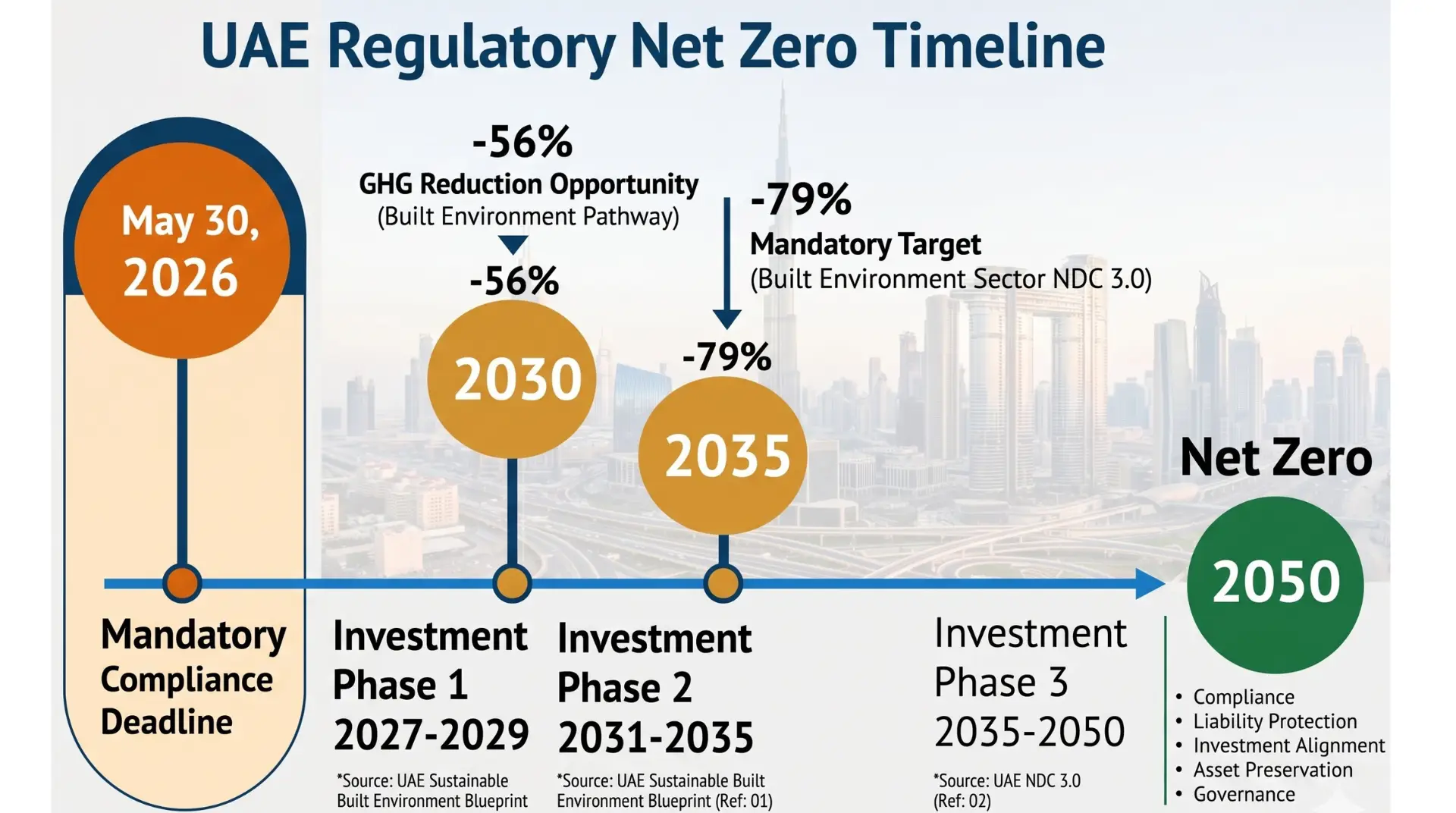
2026 is not a sustainability milestone — it’s a capital risk deadline
From 2026 onward, Net Zero compliance must be demonstrable at owner and operator level across Abu Dhabi and Dubai hospitality assets — while Abu Dhabi’s accelerated 2027 decarbonization targets require many critical retrofit and capital decisions to already be finalized during the 2026 planning window.
The decisions made during this 2026 investment window will determine:
- long-term asset value
- regulatory compliance exposure
- operational flexibility
- future technology lock-ins
Most risks are not created during implementation —
but when decisions are made too early, without clarity.
Why Luxury Hospitality Faces a Unique Net Zero Challenge
Luxury hospitality assets operate within a uniquely compressed decision environment where regulatory, operational and ownership realities often conflict.
Navigating the transition requires balancing premium hospitality standards with increasingly rigid UAE compliance frameworks.
The transition is defined by five interconnected friction points:
- Owner–Operator Governance
HMAs and split incentives often delay critical investment decisions. - Uncompromised Guest Experience
Guest comfort and service standards cannot be compromised by poorly structured decarbonization measures. - Commercial Infrastructure Dependency
District Cooling agreements and PPAs materially influence retrofit flexibility and long-term economics. - Compliance Escalation
UAE Climate Law, Estidama POR and Dubai DET frameworks require accelerated strategic alignment. - Long-Term Asset Longevity
Premature technology decisions can compromise long-term flexibility and future compliance adaptability.
Why Independent Board Advisory Matters
Protecting Capital. Ensuring Compliance. Securing Alignment.
Traditional implementation-led approaches often prioritize technology selection before governance clarity is established — creating long-term lock-ins and reducing future optionality.
As an independent board advisor, we provide fiduciary oversight before major Net Zero commitments are authorized.
- Independent Fiduciary Perspective
Complete vendor neutrality aligned exclusively with owner-side strategic interests. - Governance-Ready Decision Structures
Clear, auditable and defensible decision pathways before capital is committed. - Long-Term Optionality Protection
Avoiding premature infrastructure commitments and stranded CapEx exposure. - Strategic Alignment Across Stakeholders
Maintaining clarity between owners, operators, brands and implementation stakeholders.
Independent fiduciary oversight for premium hospitality assets –
operating under increasing regulatory and investment complexity.
Most long-term Net Zero exposure is created long before implementation begins.
In premium hospitality, critical risks emerge when investment pathways, compliance assumptions and technology decisions are approved without independent governance clarity.
This is why Net Zero decision quality matters before major capital is committed.
Clarity Before Capital Is Committed
Independent advisory for hotel owners and operators navigating complex UAE Net Zero investment and compliance decisions.
Decision certainty
Board-ready clarity before irreversible decisions are made.
Capital protection
Identify hidden CapEx exposure and technology lock-in risks early.
Compliance Alignment
Align with UAE Climate Law, Estidama POR and Dubai DET frameworks.
Strategic Clarity
Translate technical complexity into actionable investment pathways.
Independent Board-Level Advisory for Premium Hospitality Assets
30+ Years German Engineering Leadership
Board-level advisory for complex hospitality transformation and long-term asset strategy.
Strategic Framework Lead — Abu Dhabi DSM
Assessment framework applied across 30,000+ buildings for ADWEA / DoE.
Independent Fiduciary Advisory
Vendor-neutral oversight aligned with owner and operator strategic interests.
A structured path to clarity, compliance and capital protection
2026 is a compliance deadline — not a target.
Net Zero outcomes are determined long before implementation begins.
We help owners and operators structure defensible Net Zero investment decisions with clarity and confidence.
Phase 0
Compliance & Investment Baseline
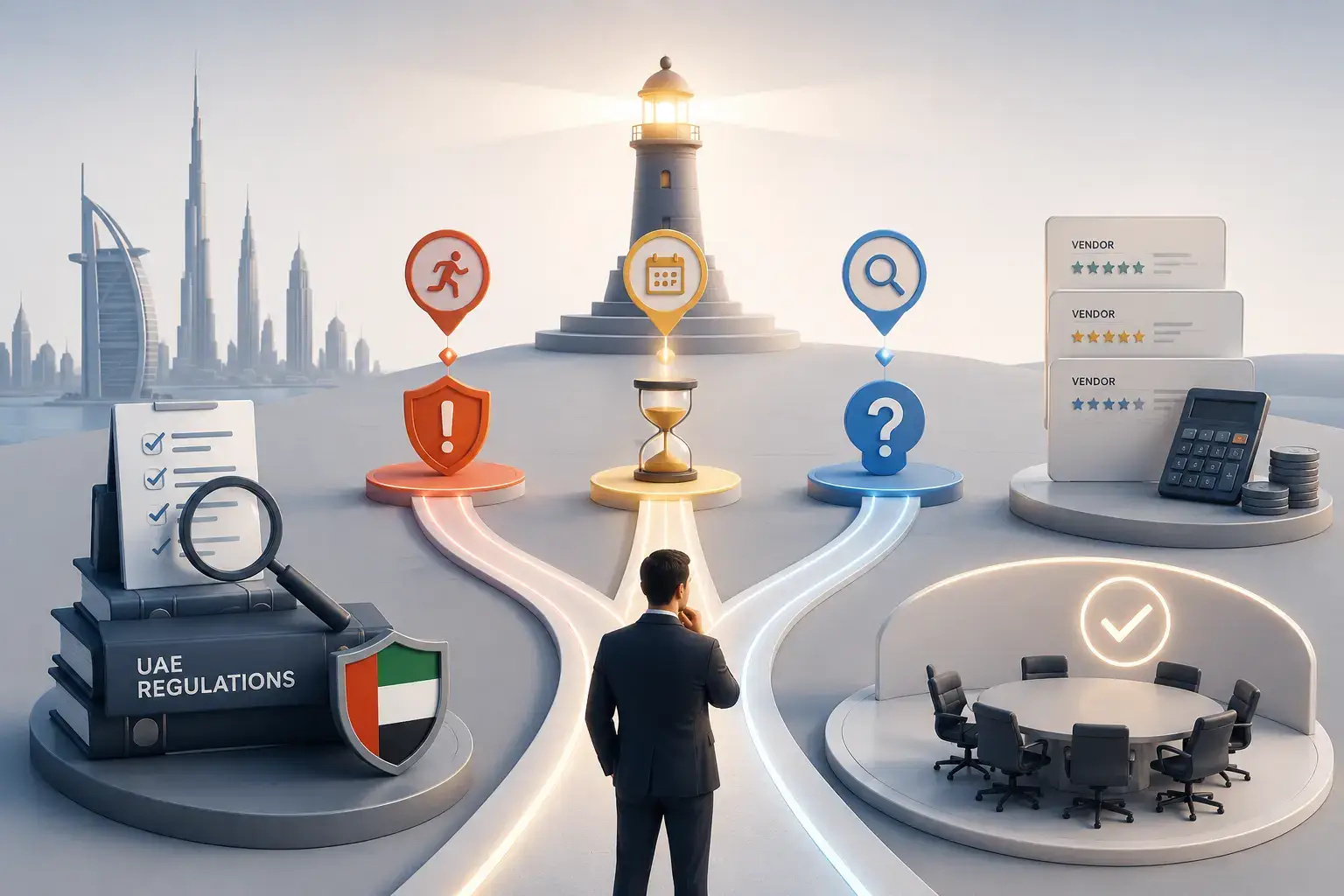
Clarifying your 2026 compliance exposure before capital commitments are made
We establish an independent, vendor-neutral decision baseline identifying:
- immediate compliance priorities,
- deferred investment areas,
- and strategic uncertainties requiring further Board visibility.
Phase 1
Defensible Net Zero Investment Pathways
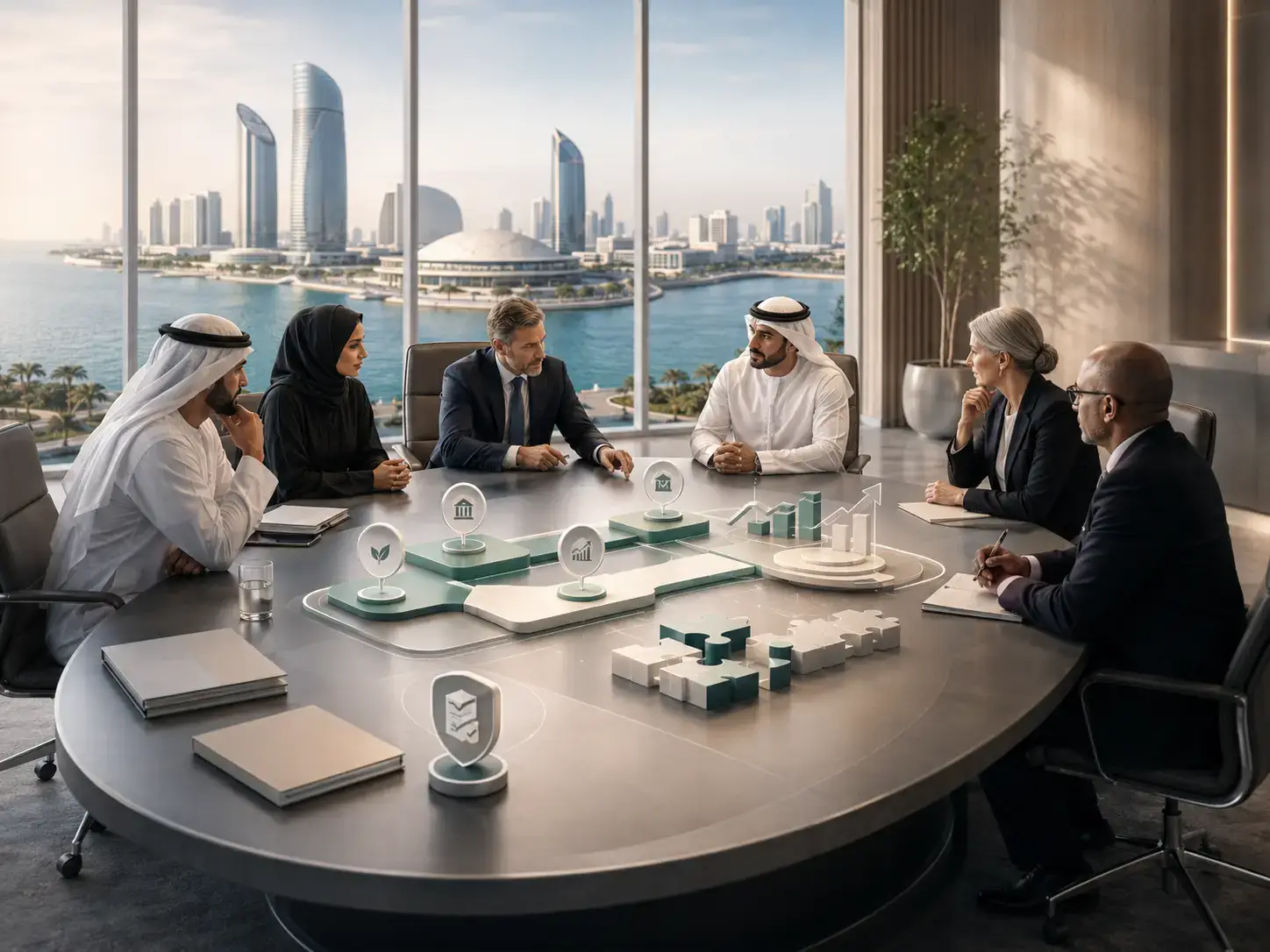
Structuring governance-ready Net-Zero decision pathways for 2030 / 2050
We translate Net Zero ambitions into structured investment pathways aligned with UAE Climate Law, Estidama POR and Dubai DET requirements.
The result:
- preserved optionality,
- reduced lock-in exposure,
- and defensible board-level investment decisions.
Phase 2
Execution Oversight & Capital Protection
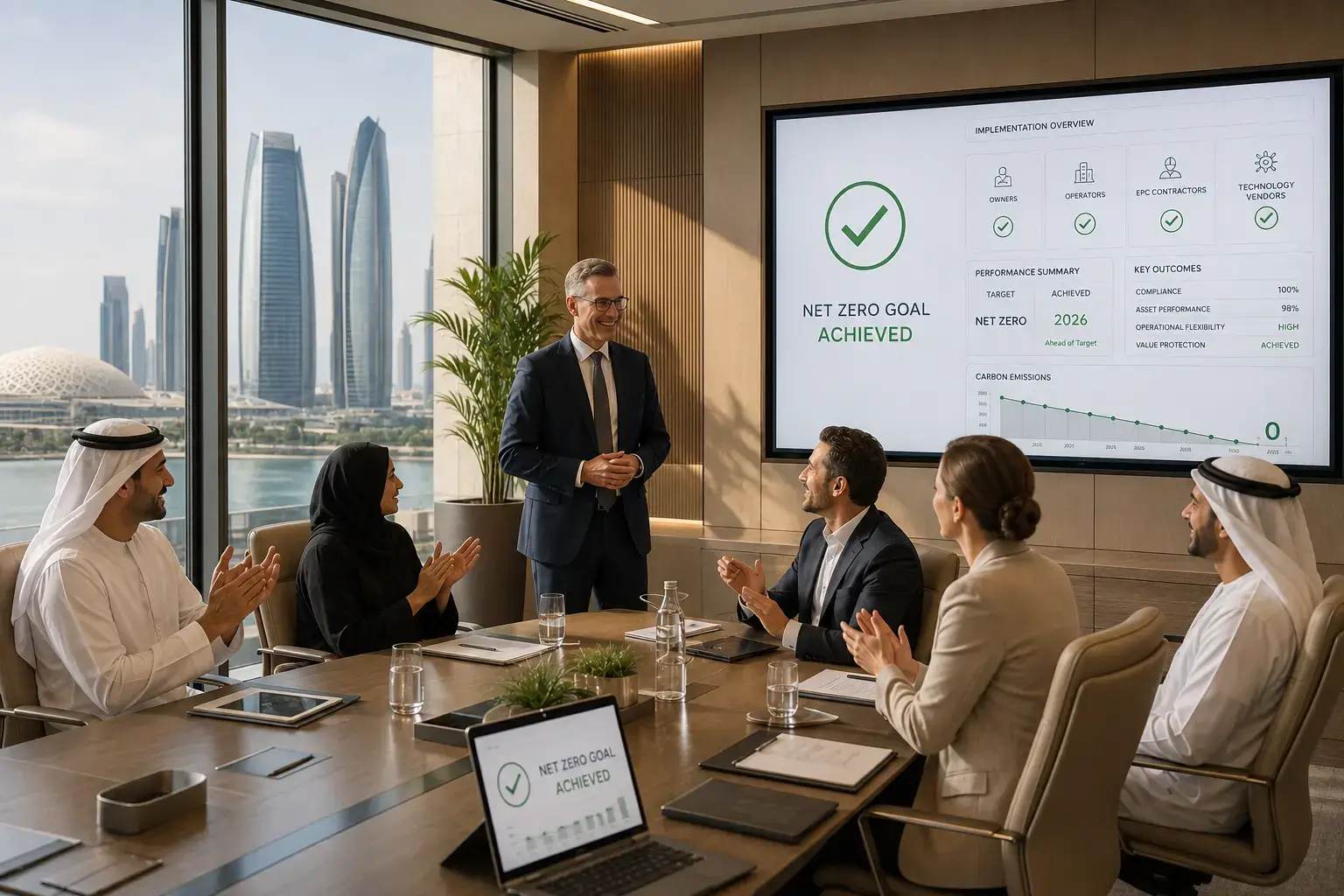
Protecting approved investment strategies throughout implementatio
We provide independent fiduciary oversight during implementation — maintaining alignment between approved pathways, compliance objectives and installed system performance.
The result:
- preserved decision integrity,
- reduced pathway deviation,
- and long-term asset alignment.
Independent Board Advisory Where Hospitality, Compliance and Capital Intersect
Luxury hospitality assets face uniquely complex Net Zero transitions across guest experience, compliance escalation and owner–operator alignment.
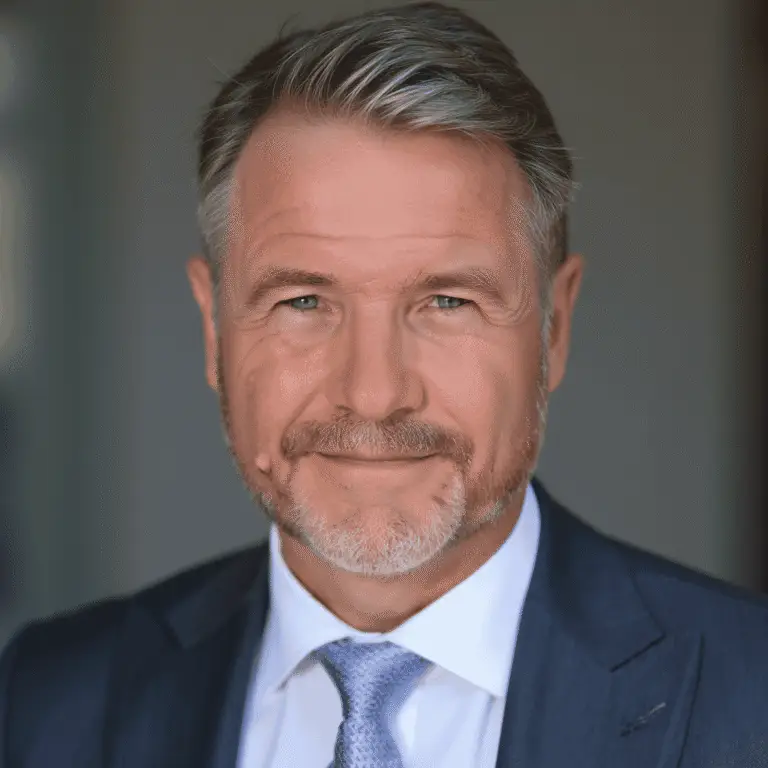
Winfried Haas advises hotel owners and operators through independent, vendor-neutral fiduciary oversight focused on long-term asset protection and defensible investment decisions.
His approach combines UAE regulatory insight, engineering rigor and board-level strategic clarity developed through decades of infrastructure leadership across premium assets.
Board-Level Advisory Across Hospitality Ownership and Operations
Independent board advisory for premium hospitality assets, institutional portfolios and complex owner–operator structures across the UAE.
1. Hotel Owners & Family Offices
Premium hospitality assets, private estates and long-term asset preservation mandates.
2. Hotel Operators & Executive Leadership
Owners’ representatives, boards, operators and executive hospitality leadership.
3. Institutional & Sovereign-Linked Stakeholders
Institutional portfolios, sovereign-linked entities and strategic infrastructure investors.
4. Premium Hospitality Assets
Luxury hotels, resorts and mixed-use hospitality developments across Abu Dhabi and Dubai.
FAQ
Key Questions UAE Hospitality Leaders Are Asking About Net Zero Compliance
Does UAE Net Zero regulation already require hotel investment decisions by 2026?
While UAE Net Zero targets extend to 2030, 2035 and 2050, hospitality assets are already entering the critical decision phase.
By 2026, audit-ready emissions reduction roadmaps must demonstrate alignment with:
- the UAE’s built-environment decarbonization pathway targeting approximately -56% emissions reduction by 2030 and -79% by 2035,
- as well as Abu Dhabi’s Climate Change Strategy 2023–2027 targeting approximately 22% CO₂ reduction by 2027.
Achieving these targets requires major investment decisions in building envelope upgrades, glazing, chillers, AHU retrofits and operational systems before the 2027–2029 implementation phase.
Delayed or poorly structured decisions can create stranded CapEx, technology lock-ins and long-term compliance exposure
What is the May 2026 UAE Net Zero compliance deadline for hotels?
From May 2026 onward, UAE Climate Law requires demonstrable emissions monitoring and audit-ready reduction roadmaps at owner and operator level.
For hospitality assets, this increasingly affects investment planning, operational reporting and long-term asset strategy across Abu Dhabi and Dubai — particularly in light of UAE targets requiring emissions reductions of -56% by 2030 and -79% by 2035.
Failure to demonstrate compliance readiness may expose asset owners and operators to escalating regulatory risk, including potential penalties of up to AED 2 million under the UAE Climate Law framework.
What must Abu Dhabi hotels implement by 2027 to remain aligned with Net Zero compliance requirements?
The period between 2026 and 2027 marks the transition from planning into mandatory implementation for UAE hospitality assets.
By May 30, 2026, hotel owners and operators must submit audit-ready emissions data and reduction roadmaps under the UAE Climate Law framework.
At the same time, Abu Dhabi’s Climate Change Strategy 2023–2027 targets approximately -22% CO₂ reduction by 2027 — creating accelerated pressure on energy-intensive hospitality assets.
For luxury hotels, this is particularly significant because cooling systems and AHUs can represent up to 70% of total energy consumption, while upcoming performance audits and third-party verification requirements are expected to intensify.
As a result, many major retrofit, cooling and infrastructure investment decisions must already be approved and entering implementation by 2027 to remain aligned with both Abu Dhabi’s accelerated pathway and the UAE’s broader 2030 Net Zero targets.
How do Abu Dhabi Estidama POR and Dubai DET requirements affect hotels?
Abu Dhabi and Dubai are implementing different but increasingly aligned sustainability and operational compliance frameworks. Abu Dhabi hospitality assets are influenced by Estidama Pearl Operational Rating (POR) pathways and DSM-related performance expectations, while Dubai hospitality assets are increasingly shaped by DET sustainability requirements linked to hotel operations and classification standards.
Why do luxury hotels require specialized Net Zero advisory?
Luxury hospitality assets operate under uniquely complex conditions, including high cooling demand, owner–operator structures, guest comfort expectations, district cooling dependencies and long asset lifecycles. Standard ESG or engineering approaches often fail to address these operational and governance realities.
Don’t Energy Performance Contracts (EPCs) already solve these Net Zero investment challenges?
Not entirely.
Energy Performance Contracts (EPCs) are primarily implementation and performance-delivery mechanisms focused on achieving predefined energy savings targets — typically through measures with relatively short payback periods.
However, achieving UAE Net Zero targets often requires additional long-term investments in areas such as building envelope upgrades, glazing, chillers, AHU retrofits and broader asset transformation measures that extend beyond typical EPC optimization scopes.
In addition, EPC structures require highly specialized technical, commercial and contractual expertise from both owners and operators. In markets such as Germany, these projects are commonly supported by dedicated energy agencies and certified EPC experts to ensure transparent baselines, accurate savings calculations and fair contractual structures.
Winfried Haas is a certified German EPC expert with decades of experience in complex energy performance projects. This experience helps hospitality owners and operators identify common EPC pitfalls — including baseline manipulation, unrealistic savings assumptions, technology lock-ins and commercial structures that can create unnecessary long-term cost exposure.
An independent Net Zero board advisor therefore acts before and alongside EPC implementation — helping owners and operators ensure that proposed EPC pathways remain aligned with long-term compliance, capital protection and operational flexibility.
In many cases, the most critical risks are created before the EPC is signed.
Why is independent vendor-neutral advisory important for hotel Net Zero investments?
Many Net Zero implementation pathways are shaped by equipment vendors, EPC contractors or performance-based solution providers. Independent board-level advisory helps owners and operators evaluate technology pathways objectively, avoid premature lock-ins and protect long-term asset flexibility.
In addition, EPC structures are typically optimized around short-payback energy efficiency measures — while achieving UAE Net Zero targets often requires broader long-term asset transformation strategies extending beyond standard EPC scopes.
Independent oversight is also critical for validating baselines, savings assumptions, contractual structures and owner–operator alignment — areas where poorly structured EPC agreements can create unnecessary long-term cost exposure and compliance risk.
What are the biggest risks in hotel Net Zero retrofit projects?
The largest risks are often created before implementation begins. Common issues include oversized capital programs, incompatible technology pathways, poorly structured EPC agreements, owner–operator misalignment and investment decisions made without sufficient regulatory clarity.
Additional risks frequently arise from inaccurate energy baselines, overly optimistic EPC savings calculations and poorly structured measurement methodologies that can materially distort guaranteed savings performance.
For UAE hospitality assets, district cooling contracts can also create significant hidden cost exposure when capacity charges, tariff structures and load parameters are not properly optimized — resulting in unnecessarily high monthly operating costs over many years.
When should hotel boards begin Net Zero investment planning?
Boards should begin strategic Net Zero planning immediately.
By May 2026, audit-ready emissions reduction roadmaps must already demonstrate alignment with UAE targets of -56% by 2030 and -79% by 2035.
Because these targets require major investments in chillers, AHU retrofits, building envelope upgrades and operational systems, the critical decision phase is taking place now — while the main implementation window typically falls between 2027 and 2029.
The most important risks are therefore created not during implementation, but during the early investment and roadmap decisions being made today.